The Great Flattening: This CEO’s radical experiment has 90,000 people working without bosses
CNBC Make It
You may have noticed that middle managers’ jobs are disappearing.
Major employers — ranging from Amazon and Meta to companies like Walmart, UPS, and Estée Lauder — have made headlines in the post-Covid era for cutting layers of middle management in pursuit of greater efficiency. The trend is sometimes referred to as the “Great Flattening.”
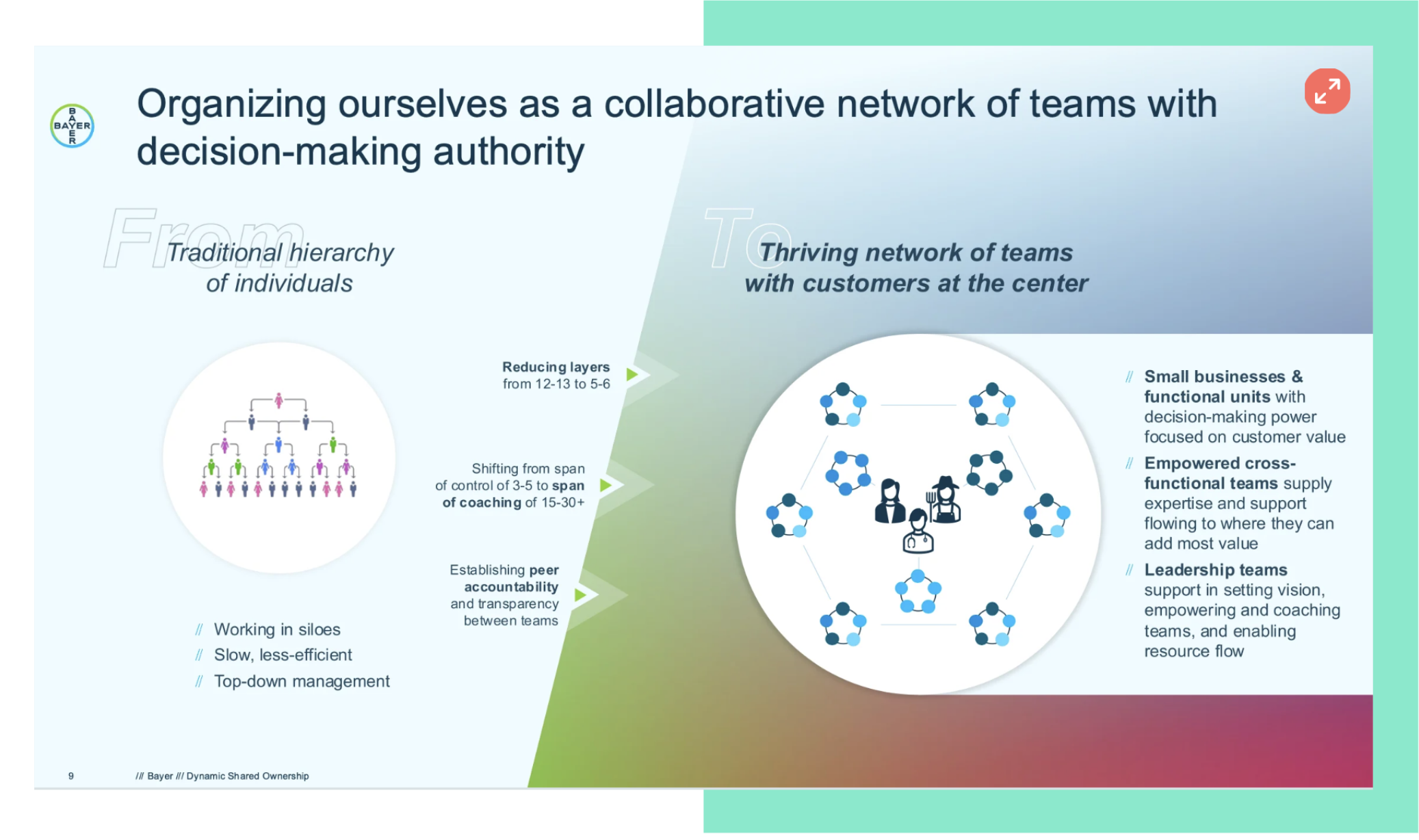
But if you asked one CEO — Bill Anderson of German life sciences giant Bayer, which is best known for inventing aspirin — he might tell you that those other companies aren’t going far enough. Anderson, who’s run Bayer since June 2023, has spent his tenure attempting to answer the question: Can a large company run with nearly no middle managers at all?

The 100 Most Influential People in AI | 2025
TIME
One of the dominant AI storylines of 2025 has been the competition over people. Investors have poured hundreds of millions into startups, reflecting the perceived value of founders, and leaders of Big Tech firms like Meta’s Mark Zuckerberg have reportedly offered nine-figure deals to attract prized technologists. Those hires, accompanied by frenzied rumors, have turned the once obscure competition over AI researchers into something that better resembles professional sports free agency. The stakes for beating the competition are so high that leading researchers are courted like NBA All-Stars. (Two of Zuckerberg’s noteworthy hires, Alexandr Wang and Nat Friedman, join him on the 2025 TIME100 AI.)
97 Direct Reports? No Problem.
The New York Times DealBook
When Bill Anderson took over as the C.E.O. of Bayer in 2023, it faced a trifecta of big problems — expensive lawsuits, expiring drug patents, a mountain of debt — that had sent its stock price plummeting.
His first big move? Cut the bosses.
The strategy, coined “Dynamic Shared Ownership,” envisions replacing traditional corporate hierarchy with thousands of self-managing teams that band together for 90-day work cycles. Since introducing it in July 2023, Bayer has cut about 11,000 jobs, Anderson said in a call with analysts last month.
The Best Inventions of 2025
TIME
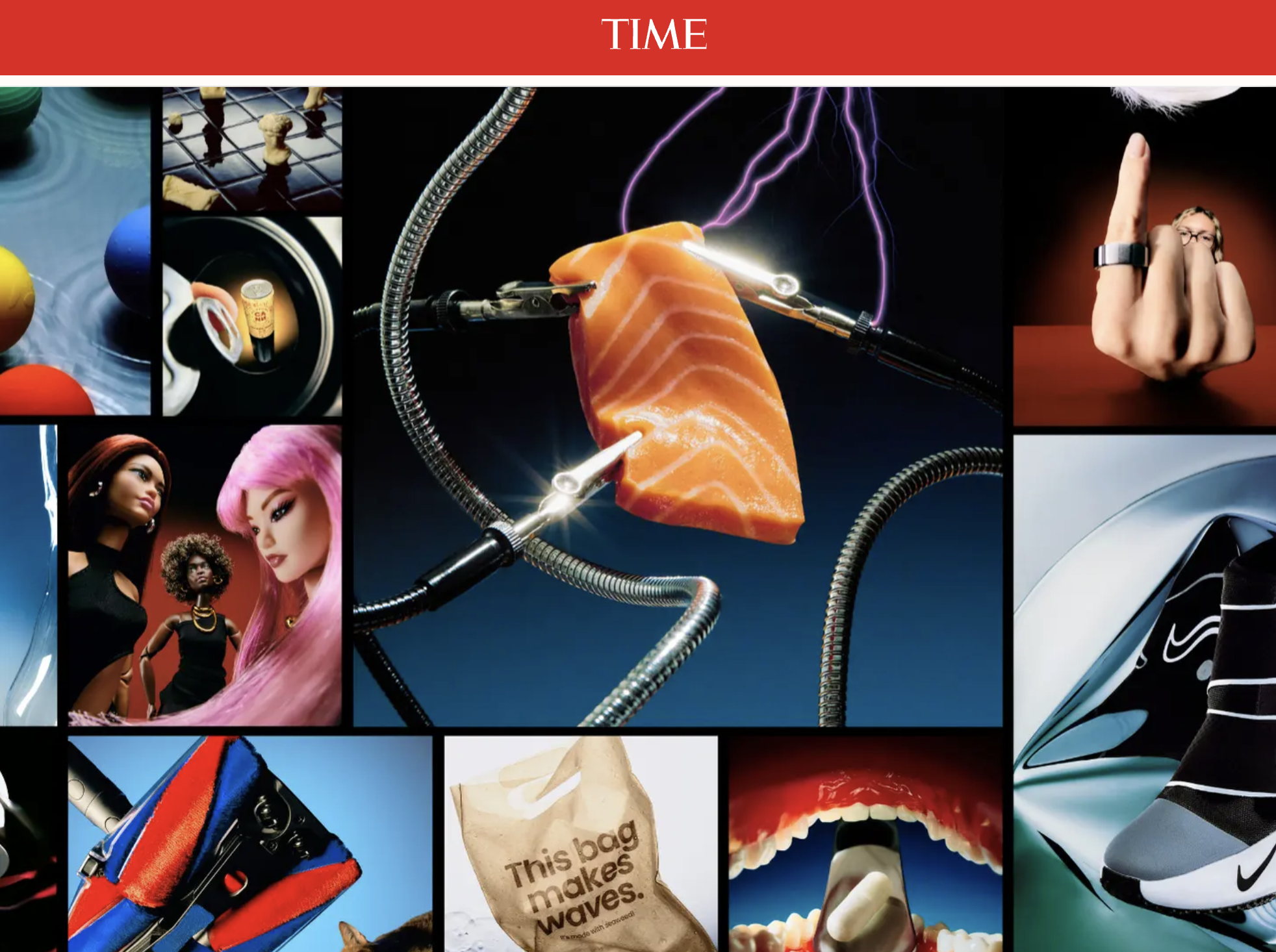
For each of the past 25 years, TIME editors have highlighted the most impactful new products and ideas in TIME’s Best Inventions issue. The first, published under a cover featuring the protracted Bush v. Gore presidential vote count in December 2000, covered about 35 inventions, including some that feel a world away: the Ricoh RDC-i700 (a digital camera that could post photos to the internet), the first 3D ultrasound imaging for pregnant parents, and a bike with two pontoons that intrepid cyclists could ride on a lake.
Across a quarter century, the pace of innovation has only accelerated, and to accommodate that, this year’s list features 300 inventions—our biggest list ever.

Revisiting Tony Hsieh’s Kingdom of Happiness, a decade later
Medium
When Tony Hsieh suddenly passed away in November 2020, I wrote tributes for Quartz and Business Insider reflecting on how far ahead of his time he truly was. I urged readers to give him a longer arc — to assess his impact not just as the CEO who revolutionized online retail through Zappos, but as a visionary thinker whose ideas about self-organization, city-building, and human potential would take years, perhaps decades, to be fully understood. Five years later, in a world transformed by AI, hybrid work, and new ideas about leadership, his experiments look more like early prototypes for the future of work and community.

Is your organization—and leadership style—adaptive enough for this moment?
The Ready
Over a breathtakingly fast timeline, the novel coronavirus is accelerating an evolutionary shift in how we work. Silicon Valley venture capital firm Sequoia labeled the coronavirus the Black Swan of 2020 and reminded founders and CEOs that “in some ways, business mirrors biology … those who survive ‘are not the strongest or the most intelligent, but the most adaptable to change.’”
Zappos has evolved beyond Holacracy
Quartz
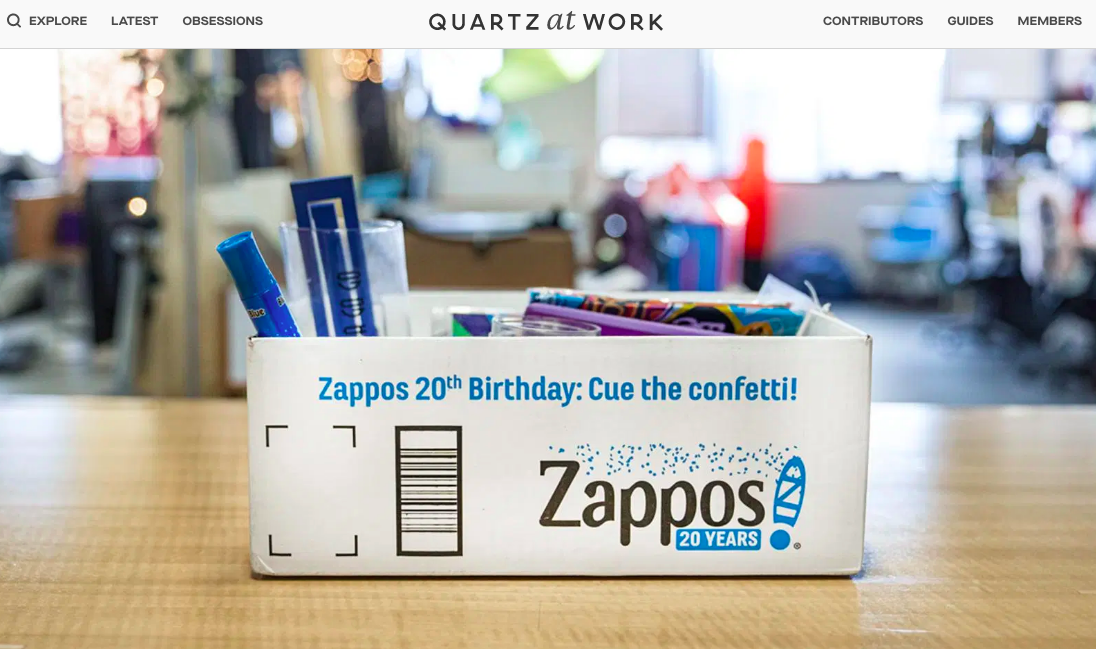
Six years ago, Amazon-owned Zappos began upending its traditional management structure. In lieu of a typical corporate structure, with power concentrated at the top, the online shoe retailer would adopt a decentralized system with “no job titles, no managers, no hierarchy.”
CEO Tony Hsieh was originally inspired by the idea of creating a city-like environment without central planning. “Every time a city doubles in size, productivity per resident goes up 15%,” he has said. He saw holacracy, a new kind of management structure predicated on decision-making authority being distributed throughout the organization, as the tool to access that kind of resilience and hyper-productivity. Zappos has since embraced a new framework to support this vision, called market-based dynamics (“MBD”).
Why Amazon, Apple, and a Slew of Startups Are Fighting to Get Into This L.A. Neighborhood
Marker
How sleepy Culver City became the next tech boomtown. This past year, VCs invested close to $1 billion in Culver City startups like gaming company Scopely and storage startup Clutter, whose marquee investors include Sequoia Capital and Softbank. (By comparison, the greater Los Angeles area, including Orange County, pulled in $12.6 billion in total.)
Designing companies for human flourishing
Quartz
Former McKinsey consultant Frederic Laloux was compelled to find answers to this question after a decade of exploring the interiors of some of the world’s most influential companies as a coach and advisor. He determined there must be a better way to design companies in the 21st century. So he left his job and began researching organizations that are operating at “the next stage of consciousness.” Laloux discovered a number of successful companies that fit this description, ranging in size from a few hundred to several thousand employees.
“This next stage involves taming our ego and searching for more authentic, more wholesome ways of being,” Laloux wrote. “If the past is any guide to the future, then as we grow into the next stage of consciousness, we will also develop a corresponding organizational model.”
Is Holacracy —or self-organization more broadly — the future of work?
Quartz
The philosophy behind holacracy—that power needs to be distributed throughout the network— makes intuitive sense, particularly in the age of emerging blockchain technology. Robertson, an early cryptocurrency investor and a libertarian, isn’t shy about his frustration with the US political system and his vision for holacracy’s potential to spread from business and eventually inform a new set of principles to govern states and territories.
Societal holacracy is clearly a vast leap, but as a new system of organizational design, it is winning fans. HolacracyOne counts a few hundred companies as clients and estimates that there are about 1,000 organizations around the world that have adopted its methods. Google, Ernst & Young, and Dubai governmental agency KHDA have all experimented with holacracy, with varying degrees of success.
What Mark Zuckerberg taught this VC about leadership
Quartz
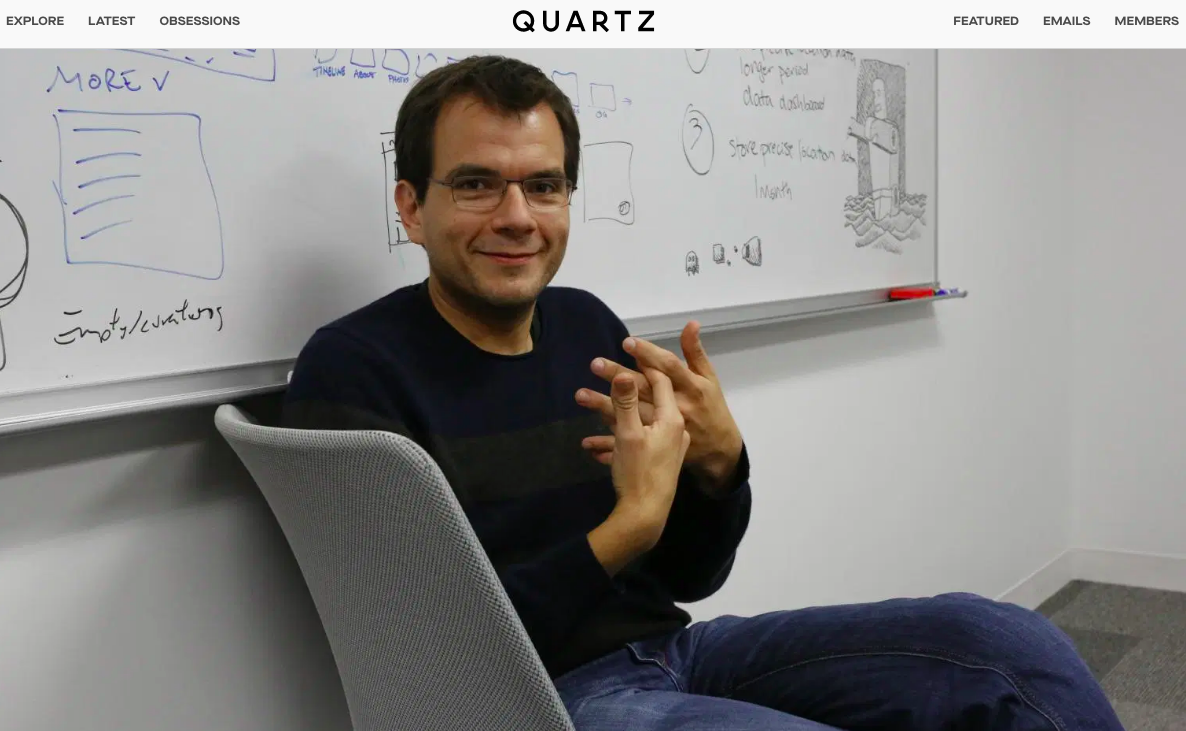
Mike Vernal learned a lot by reporting directly to Mark Zuckerberg for nearly a decade at Facebook, including what traits separate CEOs like Zuckerberg from the rest.
“The best founders have what is called a ‘growth mindset’—where they really value learning and self improvement above all else,” Vernal explained from Chelsea Piers in New York, where Sequoia Capital, the venture firm he joined six months ago, was hosting an event to encourage college students to join startups. “They surround themselves with advisors who help them get that, surround themselves with team members who help them get that, and try to discipline themselves to learn new things, constantly acquiring new skills and getting better at the things that you need to get better at.”
Inside the fascinating Holacracy experiment at Zappos
Quartz
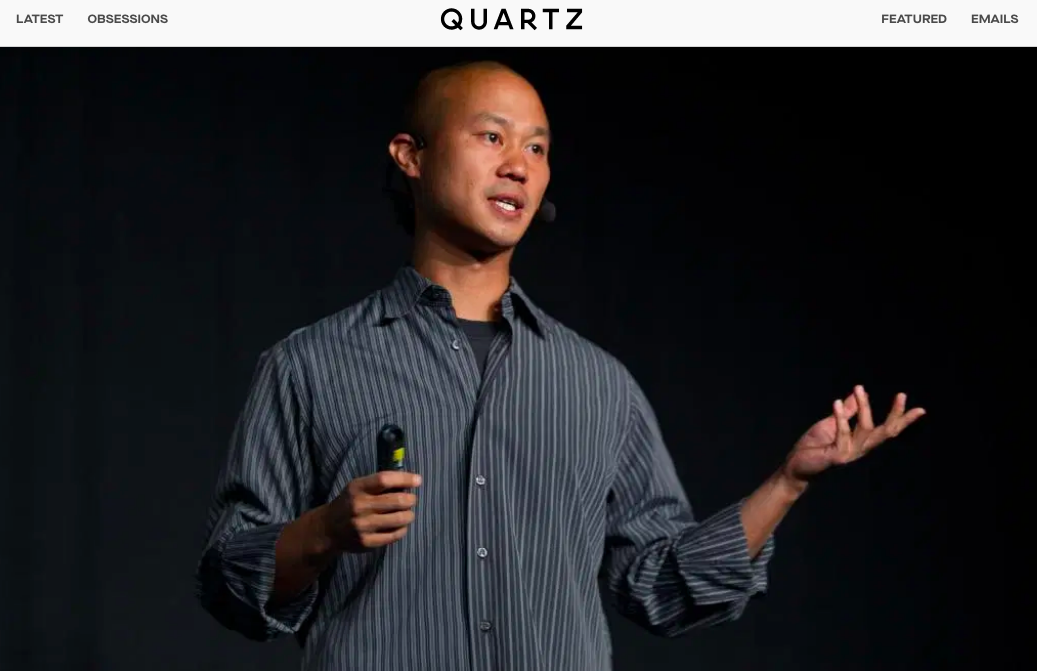
CEO Tony Hsieh’s experiments with corporate organization make Zappos an important laboratory for confronting some of the plagues of large companies, including employee disenchantment and inability to take risks, move quickly, surface problems, and tap into the full staff’s best ideas. A wave of other companies, many of them tech startups, are similarly trying to reengineer management practices.
Why it’s more demanding to work for a company without a traditional hierarchy
Quartz
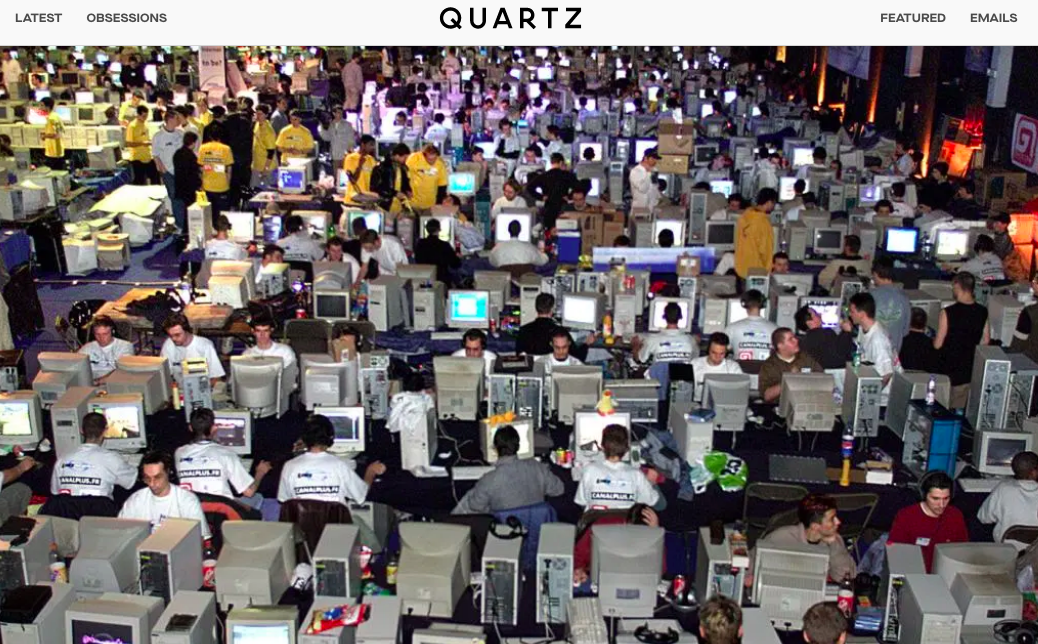
Working without a manager might sound like a dream but the reality is that it’s often much more demanding. As companies like Zappos and Medium adopt self-governing structures, flat management is piquing the interest of myriad organizations—though it’s not entirely new.